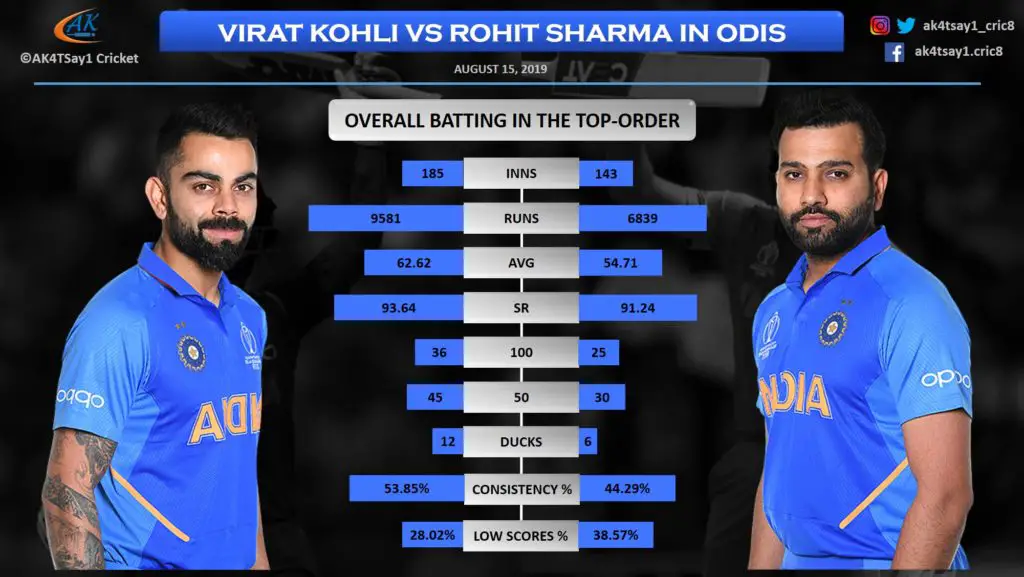
Rohit Sharma vs. Virat Kohli: A Comparison of Styles
Two of India’s most influential batsmen of the modern era, Rohit Sharma and Virat Kohli, have shaped contemporary cricket with contrasting yet equally effective approaches. While both possess remarkable records, their styles, temperaments, and leadership philosophies reveal distinct cricketing identities. Comparing them offers insight into how technique, mindset, and strategic choices inform success at the highest level.
Batting Techniques and Innate Strengths
Rohit is renowned for his effortless timing and ability to accelerate after settling in. His expansive cover drive and pull shot are hallmarks of a player who reads bowlers early and exploits gaps with minimal apparent exertion. Rohit’s backfoot play against short deliveries is particularly refined, enabling him to dominate pace and bounce on varied surfaces.
Aggression and Consistency
Virat’s game is characterized by intense intent and relentless run accumulation. He thrives on constructing innings under pressure, converting starts into big scores with remarkable concentration. His balance and compact technique allow him to play both spin and pace with conviction, while his cover drive and ondrive are executed with textbook precision.
Leadership Styles
Rohit’s captaincy is often described as calm and measured. He cultivates an atmosphere of freedom, trusting senior players while encouraging young talent. Rohit prefers strategic clarity over reactive moves, relying on experience and reading of conditions. His ability to rotate the attack and back bowlers in key moments reflects his situational awareness.
Intensity and Lead by Example
Virat leads through relentless intensity and personal performance. His fitness and aggressive approach set standards, raising expectations in training and matches. As a captain he often demands discipline and high standards, using emotional intensity to inspire teammates. Virat’s tactical decisions tend to be proactive, and he balances individual excellence with team objectives.
Adaptability Across Formats
Both players have adapted impressively across formats. Rohit’s knack for double centuries in Tests and ODI big scores demonstrates an ability to transform style when required, moving from opener’s patience to annihilating bowling attacks once settled. Kohli’s chase mastery and consistency across all formats underline mental resilience and technical solidity, allowing him to anchor innings or accelerate as situations demand.
Temperament and Public Persona
The two differ in public demeanor. Rohit often projects calm composure and a laidback charm, which can defuse pressure situations. Kohli’s intense public persona reflects his competitive fire and is sometimes polarizing, yet it channels into fierce on-field performance. Both have vast fan followings and handle scrutiny differently, shaping their legacies in unique ways.
In practice, selecting a preference between Rohit Sharma and Virat Kohli often comes down to what a team or fan values most: the subtle elegance and timing that can change a match without overt theatrics, or the fierce accumulation and psychological dominance that relentlessly pressures opponents. Rohit’s natural flair and ability to accelerate with apparent ease make him an ideal match-winner when conditions suit his style, while Kohli’s uncompromising pursuit of runs and refusal to yield ground create innings that carry teams through adversity. As leaders they offer complementary blueprints: one emphasizing calm delegation and strategic clarity, the other emphasizing personal standards and energetic motivation. Both approaches have yielded trophies and memorable victories, showing there is no single formula for success. Young cricketers can learn from both: adopt Rohit’s spatial awareness and shot selection, and channel Kohli’s discipline, hunger, and consistency. Ultimately, the richness of modern Indian cricket is enhanced by having both figures dominate different chapters of the sport, and debates over superiority say more about personal taste than objective truth, because the broader legacy they create together is one of excellence, adaptability and inspiration that will influence generations to come and enduring legacy.